Two players with exactly the same rating can play chess in completely different ways. One attacks from move five and wins or loses within 25 moves; the other builds the position slowly and wins a 60-move endgame with a one-pawn edge. Both are 1500. Both are right. What differs is their playing character — and recognizing that character is one of the fastest ways to improve your results.
This article isn't a personality quiz. It explains the six skill axes Katuranga uses to draw a player's DNA from real games, introduces six characters that emerge from their combinations, and — the most important part — shows what players of each character should do to reach the next level.
Why does playing character matter?
Most chess advice is generic: "train tactics", "study endgames", "don't play too fast". It's all true, but not all of it applies to you equally. An attacker who trains nothing but tactics just sharpens what's already sharp; a builder studying endgames for the seventh time wastes time that should go into practicing calculation.
Character determines weaknesses. And weaknesses, not strengths, determine rating. A 1400 player whose tactics are 1700-level but whose endgame is 1100-level will stay at 1400 until the endgame improves — because opponents who know will trade everything off and take the game to where they're weakest.
So the first step is to measure, not to guess.
The six axes of a player's DNA
Katuranga draws a six-axis radar on every player's profile page, calculated from games reviewed in Analysis. All six were chosen because each can be measured from games, not from a quiz:
1. Opening Knowledge
Measured from the quality of the first 10–12 moves: how often your moves still follow theory or at least aren't marked as inaccuracies, and how healthy your position is when you leave the opening. A high number means you rarely get into trouble early; a low number means you often have to "repair" your position from move 12.
2. Tactical IQ
Measured from two directions: how often you find the tactics that exist (best moves that are captures, checks, or double threats), and how often you miss your opponent's tactics (blunders that allow a fork, pin, or mate). Brilliant moves count here too. This axis changes fastest with puzzle practice.
3. Endgame IQ
Measured from the accuracy of your moves once there's little material left on the board — usually after the queens come off — compared with the result the position deserved. Drawing from a winning position or losing from a drawn one lowers this number sharply. This axis is most often the lowest for players below 1500, and gives points back fastest when improved (see how to learn endgames).
4. Calculation IQ
Measured from accuracy in critical positions: positions where only one or two moves hold the evaluation and every other move drops it. Players with high Calculation IQ find the right move in those narrow moments; players with a low number play well in loose positions but collapse when the position demands precision.
5. Time Management
Measured from how you spend your clock: do you run out of time in winning positions, do you spend three minutes on obvious moves and three seconds on critical ones, and how often do your blunders happen when less than 10 percent of your time is left? Almost nobody trains this axis, yet in rapid and blitz it often decides the result.
6. Psychology
Measured from distinctly human patterns: does your accuracy fall after your first blunder (tilt), do you play worse after losing the previous game, do you resign too early from positions that could still be defended, and do you play rushed moves after your opponent makes a surprising one? This number is low for many players who are technically strong.
The formula for each axis is deliberately honest, with a few rules: an axis without enough data is shown empty, not zero (zero is an accusation, empty is admitting we don't know yet); numbers only change from reviewed games, not from wins and losses alone; and no axis can be raised by playing much weaker opponents.
The six player characters
From combinations of those six axes, recurring patterns emerge. Here are the six characters seen most often, each with its signs, strengths, weaknesses, and recipe.
Character 1: The Attacker
Signs: high Tactical IQ, low Endgame IQ. Short games on average (under 35 moves). Many brilliant moves, many blunders. Wins big or loses fast.
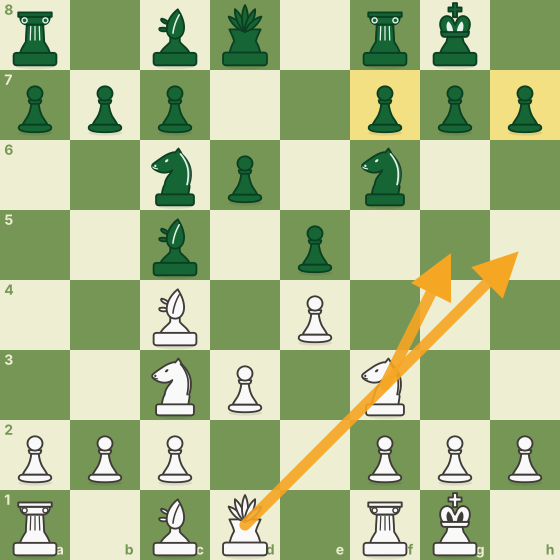
Strengths: makes opponents uncomfortable, forces hard decisions every move, and punishes mistakes quickly. Below 1500, attackers often have a higher rating than their real skill, because their opponents panic.
Weaknesses: when the attack fails, there's no plan B. Quiet positions make them restless and they force attacks that aren't there — then lose material. The endgame is foreign territory.
Recipe: learn when not to attack. Train yourself to play 10 games in a row with the London System or the Queen's Gambit Declined — openings that don't offer a quick attack. Learn two basic endgames (king+pawn, Lucena/Philidor). And before every sacrifice, calculate to the end — a brilliant badge isn't worth a loss.
Character 2: The Builder (positional player)
Signs: high Opening Knowledge, high Endgame IQ, medium Tactical IQ. Long games (over 45 moves). Rarely blunders, rarely brilliant. Wins many endgames with small advantages.
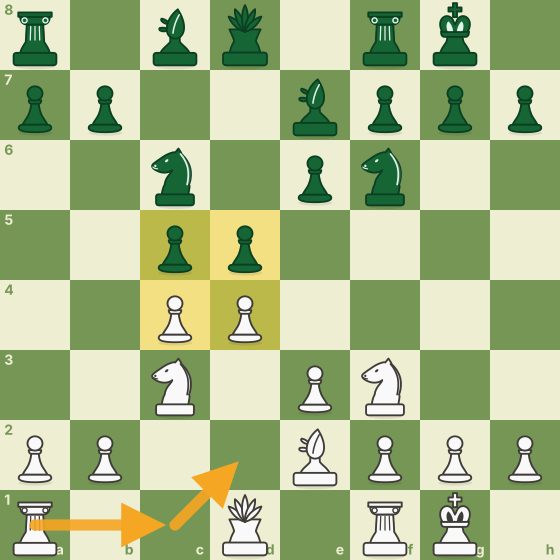
Strengths: very hard to beat. Understands pawn structures, good vs bad pieces, and waits patiently for the opponent's mistakes. Above 1600, builders usually have the most stable ratings.
Weaknesses: misses tactics — both their own (quick winning chances not taken) and their opponent's (attacks arriving faster than expected). Sometimes too passive, waiting until the opponent seizes the initiative.
Recipe: tactics puzzles every day, especially king-attack themes. Play the Vienna Game or the King's Indian for a month to force yourself into sharp positions. And in Analysis, notice moments when the engine suggests a more aggressive move than the one you chose — that's the pattern to study.
Character 3: The Calculator
Signs: high Calculation IQ, low Time Management. Very accurate in critical positions, but often runs short on time. Blunders happen with less than 10 percent of time left, almost never early.
Strengths: given time, almost impossible to trick. Finds difficult defenses and deep combinations. Good at classical and long rapid.
Weaknesses: treats every move as equally important, and spends time verifying obvious moves. In blitz, this character suffers.
Recipe: train intuition, not calculation. Play 20 blitz games at 3+2 with the rule "no thinking longer than 10 seconds unless there's a capture or check". Learn to tell apart moves that need calculating from moves that can simply be felt. And set a time benchmark: in 10-minute rapid, reach move 20 with at least 5 minutes left.
Character 4: The Endgame Grinder
Signs: high Endgame IQ, low Opening Knowledge. Often leaves the opening slightly worse, then equalizes and wins in the endgame. Very long games, many draws that turn into wins on move 70.
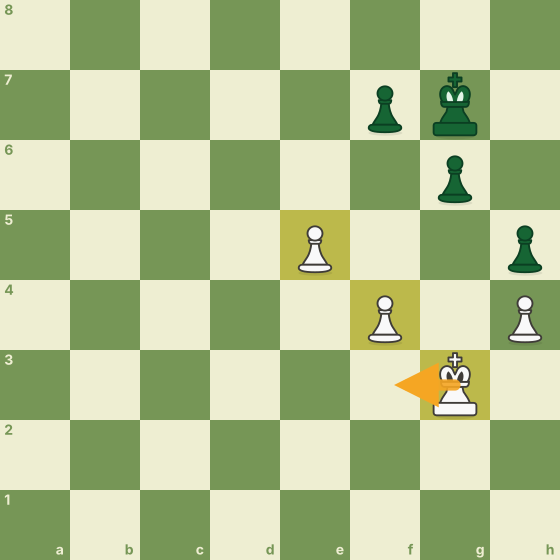
Strengths: technique most opponents at their level don't have. Extraordinary patience. Rarely loses from drawn positions.
Weaknesses: too often has to defend from the start because the opening is weak. Against the right attacker, the game ends before the endgame arrives.
Recipe: fix the opening the cheapest way: pick one system (see the best openings for beginners), play 50 games, review their first 10 moves. The goal isn't becoming a theory expert, but to stop entering the middlegame with a worse position.
Character 5: The Speedster
Signs: very high Time Management, low-to-medium overall accuracy. Plays fast, almost never loses on time, but makes many inaccuracies. Blitz rating far above rapid rating.
Strengths: doesn't panic, doesn't get trapped by the clock, and exploits the opponent's time pressure. In bullet and blitz, this character rules.
Weaknesses: given plenty of time, doesn't know how to use it — plays rapid at blitz speed and makes the same mistakes. Depth of thought doesn't grow when time does.
Recipe: the three-question rule from the rating guide, applied forcibly in rapid: before moving, check your opponent's threat, check for hanging pieces, check checks-captures-threats. Play 15+10 rapid aiming to spend at least 10 minutes per game. It feels slow; that's the point.
Character 6: The Streaky Player
Signs: low Psychology, other axes up and down. Game accuracy depends heavily on the previous game. Often has runs of five wins followed by five losses. The second blunder almost always comes a few moves after the first.
Strengths: when "on", plays far above their rating. Confident, brave, and intuitive.
Weaknesses: when "off", plays far below their rating — and what decides "on" or "off" isn't the position on the board, but the result of the previous game. Tilt is the biggest enemy.
Recipe: change the session rules, not the playing rules. Stop after two losses in a row, no exceptions. Hide your opponent's rating and your own. After a blunder, take a breath and tell yourself "new position" — then play the position that exists, not the one that should have existed. Katuranga's AI Coach is designed to recognize this pattern and warn you before it's too late.
How do you find out your character?
Don't guess from feelings — almost everyone thinks they're an attacker. Measure from games:
- Review at least 15 games in Analysis. From that many, the DNA radar on your profile starts filling in and patterns start to show.
- Look at the highest and lowest axes. The gap between them is your character. High Tactical + low Endgame = attacker. High Endgame + low Opening = endgame grinder. And so on.
- Check your average game length. Under 35 moves tends toward attacker or speedster; over 45 tends toward builder or grinder.
- Check when blunders happen. Early = weak opening. In critical positions = weak calculation. When time is short = time management. After the first blunder = mental.
- Compare your rapid and blitz ratings. Blitz much higher = speedster. Rapid much higher = calculator.
Most players are a mix of two characters — for example an attacker who is also streaky, or a builder who is also a calculator. That's normal. What matters is finding the lowest axis, because that's where opponents will attack you and where a month of practice gives the biggest return.
Example: two 1500 players with opposite radars
To make it concrete, imagine two players who are both 1500 in rapid.
Player A has Tactical IQ 78, Calculation IQ 70, Opening Knowledge 62, Time Management 55, Psychology 48, and Endgame IQ 35. Their average game is 31 moves. They win 70 percent of games that end before move 35, and only 30 percent of those that go past move 50. This is a pure attacker, with a touch of the mental type: after the first blunder, their accuracy drops 15 points.
Player B has Endgame IQ 80, Opening Knowledge 74, Psychology 72, Time Management 65, Calculation IQ 52, and Tactical IQ 44. Their average game is 58 moves. They almost never lose before move 40 — but 60 percent of their losses come from a single fork or pin they didn't see in the middlegame.
If they meet, the result is decided not by who's stronger, but by who manages to take the game into their own territory. A wins if the position opens up before move 25; B wins if the queens come off before A can attack.
And their training recipes are opposite: A should spend a month on basic endgames and the stop-after-two-losses rule; B should do 10 tactics puzzles a day and play sharp openings. If both follow the same generic advice — "train tactics and endgames" — A wastes half the time and so does B. That's why you measure first.
Common misconceptions about player character
"My character is attacker, so I don't need to learn endgames." Quite the opposite. Your character tells you what's already strong; your training should target what isn't. An attacker who masters endgames becomes a complete player; an attacker who only trains attacking gets stuck at 1500.
"I have to change my character to gain rating." No. Character is the natural way you see the board, and fighting it makes your play awkward. What you change isn't the character, but the holes around it. Tal stayed an attacker to the end of his life; he just stopped losing endgames.
"Rating determines character." Not really either. There are 900 attackers and 2400 attackers. What differs is how many holes have been patched.
"Character is fixed." It changes slowly with training and age. Many players who were attackers when young become builders after decades — not because they lost courage, but because their understanding grew.
Using character against your opponent
This part is for those who already know their own character: your opponent's character can be read too, and that's a weapon.
- Against an attacker: don't join the attack. Trade queens if you can, steer toward quiet positions, and let them force something that isn't there.
- Against a builder: create chaos early. Gambits, sound sacrifices, unbalanced positions — builders are uncomfortable when their structure is broken before it's built.
- Against a calculator: play fast in simple positions and make them burn time. Their critical positions usually arrive when their clock is already low.
- Against a grinder: don't enter endgames with a balanced position. Keep the queens on, or make sure you enter the endgame with a clear advantage.
- Against a speedster: slow down. Take your time in critical positions, and don't be tempted to follow their tempo.
- Against a streaky player: after they blunder, don't rush. Slow down and let them dwell on the mistake — their second blunder usually follows on its own.
On Katuranga, your opponent's game history in Online Duel and their public profile give you early clues — average game length and radar axes are enough to guess their character before the first move.
Closing
Chess is often discussed as if there were only one correct way to play. In reality, the road to 2000 can be traveled by attackers, builders, calculators, endgame grinders, speedsters, and streaky players alike — as long as each knows which holes to patch.
Review 15 of your games, look at the radar, find the lowest axis. Spend a month there. Then look at the radar again — and find the new lowest axis. That's how a character grows into complete strength: not by changing who you are at the board, but by no longer losing in places that aren't your territory.
Frequently asked questions
What are the types or characters of chess players?
The six that appear most often: the attacker (strong tactics, weak endgame), the builder (positional, patient, less tactical), the calculator (accurate but wasteful with time), the endgame grinder (strong technique, weak openings), the speedster (fast but shallow), and the streaky player (results depend on the previous game). Most people are a mix of two types.
How can I find out my chess playing style?
Review at least 15 games with an analysis engine, then compare your highest and lowest skill axes, your average game length, when your blunders happen, and the gap between your rapid and blitz ratings. Don't guess from feelings — almost everyone thinks they're an attacker.
Can a chess playing character change?
Yes, but slowly. Character is the natural way you see the board and doesn't need changing; what needs changing is the weaknesses around it. Many attackers become builders after decades because their understanding grows, not because they lose courage.
What is player DNA on Katuranga?
A six-axis radar — Opening Knowledge, Tactical IQ, Endgame IQ, Calculation IQ, Time Management, and Psychology — calculated from games reviewed in Analysis. Axes without enough data are shown empty, not zero, and the numbers can't be raised by playing much weaker opponents.
Which chess player character is the best?
None. Every character can reach a high rating as long as its weaknesses are patched. What determines rating isn't your greatest strength, but your weakest axis, because that's where an opponent who knows will attack.
Read also
Kenapa Kamu Selalu Kalah Main Catur? 8 Penyebab Paling Umum (dan Obatnya)
Bukan karena kamu bodoh, bukan karena lawan pakai mesin. Delapan penyebab kekalahan yang benar-benar sering terjadi di catur amatir — bidak gantung, buru-buru, main terlalu banyak, sampai kebiasaan menyalahkan koneksi — lengkap dengan obat yang bisa dicoba hari ini.
Manfaat Bermain Catur untuk Otak dan Anak: Yang Benar, Yang Berlebihan, dan Yang Jarang Dibahas
Catur sering dijual sebagai obat pintar. Tulisan ini memisahkan manfaat yang masuk akal — konsentrasi, kesabaran, kebiasaan berpikir sebelum bertindak — dari klaim yang dilebih-lebihkan, plus panduan praktis mengajari anak tanpa membuatnya benci papan.
Cara Jadi Grandmaster Catur: Tangga Gelar FIDE, Syarat Norma, dan Berapa Lama Sebenarnya
Penjelasan lengkap tangga gelar catur resmi — CM, FM, IM, GM dan gelar putri — syarat rating dan norma, cara turnamen dihitung, berapa lama jalannya, serta jalur realistis untuk pemain Indonesia yang mulai dari nol.
Try it on the board
Reading alone doesn't raise your rating. Play one game against a bot, then review it — Katuranga marks your brilliant moves, mistakes, and blunders with Stockfish.