On paper, this match should have been over quickly. India arrived at the 46th Chess Olympiad in Samarkand, Uzbekistan, as defending champions with a team where every player is rated above 2690, and in round two they fielded R Praggnanandhaa, Nihal Sarin, world champion Gukesh D, and Vidit Gujrathi. Indonesia fielded GM Susanto Megaranto and three international masters: Arif Abdul Hafiz, Satria Duta Cahaya, and Nayaka Budhidharma. The gap in average rating between the two teams was almost 300 points.
The final score: Indonesia 1½ – 2½ India. Three of the four boards were drawn, including Satria holding the world champion with the white pieces, and the only loss came from a game in which Indonesia was, according to the engine, winning by a wide margin.
This article dissects the four games one by one: how each unfolded, the key moments according to Stockfish, the playing style visible in each player's opening choices, and every player's chances according to the Elo formula — before and after the match.
Match data
Every number in this article comes from sources you can check: the official FIDE results, the game records from the live broadcast, and evaluations by Stockfish 18 at depth 16 that we ran ourselves for every move. The ratings used are those recorded in the game files.
- Board 1: GM Susanto Megaranto (2488, White) ½–½ GM R Praggnanandhaa (2761) — Caro-Kann, 79 moves.
- Board 2: GM Nihal Sarin (2718, White) 1–0 IM Arif Abdul Hafiz (2428) — Sicilian, 37 moves.
- Board 3: IM Satria Duta Cahaya (2412, White) ½–½ GM Gukesh D (2703) — Sicilian Kan, 51 moves.
- Board 4: GM Vidit Gujrathi (2697, White) ½–½ IM Nayaka Budhidharma (2383) — King's Indian, 34 moves.
Indonesia's average rating in this match was 2427.75, India's 2719.75 — a gap of 292 points. For comparison, in round one Indonesia beat Ghana 4–0, while India beat Thailand 3–1 with a surprise loss for Arjun Erigaisi. Arjun was rested in round two, as was Gilbert Elroy Tarigan on the Indonesian side.
Chances on paper: what does the Elo formula say?
Before getting into the games, it helps to see what was "expected" from this match. The Elo formula gives an expected score for every rating gap: a number between 0 and 1 stating how many points the weaker player gets from one game on average.
Using the standard formula 1 / (1 + 10^(gap/400)):
- Susanto vs Praggnanandhaa (gap 273): Susanto expected 0.17 points.
- Arif vs Nihal (gap 290): Arif expected 0.16 points.
- Satria vs Gukesh (gap 291): Satria expected 0.16 points.
- Nayaka vs Vidit (gap 314): Nayaka expected 0.14 points.
Added up, Indonesia's expectation in this match was only 0.63 points out of 4. In reality Indonesia scored 1.5 points — more than double the expectation. In other words, even though it lost the match, the Indonesian team played far above its rating in this round. Three draws against 2700-level players are not a one-board fluke; it was a consistent pattern.
Of course, the Elo formula knows nothing about piece colour, fatigue, or opening preparation. But as a benchmark, that 0.63 explains why a 1½–2½ result deserves to be called an honourable defeat — and why the one board that slipped away feels so expensive.
Board 1: Susanto Megaranto vs Praggnanandhaa — holding on for 79 moves
Opening: Caro-Kann, Tartakower Variation (1.e4 c6 2.d4 d5 3.Nc3 dxe4 4.Nxe4 Nf6 5.Nxf6+ exf6).
Praggnanandhaa, whose live rating was recorded at 2761 and who had just won the 2026 Grand Chess Tour, chose an opening that gives White no target to attack. The 5...exf6 line voluntarily damages Black's own pawn structure — doubled pawns on the f-file — but in exchange Black gets quick development, an active bishop on d6, and a safe king on the kingside. It is the typical choice of a player who wants to play long and squeeze, not to look for a quick win.
Susanto answered just as calmly: Bd3, Ne2, Qc2, castling, then Bd2 and Rae1. No sacrifices, no premature attacks. After 13...c5 14.c4 cxd4 15.Nxd4 Bd7 16.Nb5 Bxb5 17.cxb5, White got an advanced pawn on b5 and a good bishop on c4. The engine evaluation in this phase ranged from +0.3 to +0.6 for White — a small but real edge.
What followed was deliberate simplification. The e-file rooks were exchanged on move 19, Black's bishop on move 22, the queens on move 24, and on move 26 Susanto exchanged his bishop for the knight on g6 (26.Bxg6 fxg6). The position became a rook endgame with equal pawns — and that is where the real fight began.
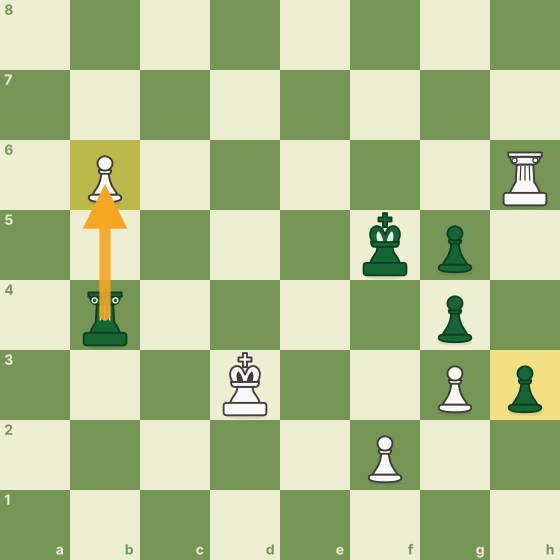
Praggnanandhaa pushed his kingside pawns — g5, h5, then h4 and h3 — while Susanto opened the queenside with a4, b4, and a5. Susanto's hardest moment came on move 49: the engine rates 49.Ke3 as a small inaccuracy (Stockfish's best move is 49.Kc2), and the evaluation shifted to −0.96 in Black's favour — Praggnanandhaa's best point in the whole game.
But Susanto did not waver. His king returned to a defensive post, his rook kept up the pressure from the side, and on move 55 Praggnanandhaa took the b6 pawn. The rest of the game was a long dance of kings and rooks up to 75.Rxh2 Rxh2+ 76.Kxh2 — a king-and-pawn endgame that is a theoretical draw. The game ended on move 79.
The lesson from this board: against a player who wants to squeeze, the best defence is boring precision. Susanto never let the evaluation pass −1, even though his opponent is one of the best endgame players in the world right now.
Board 2: Nihal Sarin vs Arif Abdul Hafiz — the win that got away
Opening: Sicilian, Chekhover Variation (1.e4 c5 2.Nf3 d6 3.d4 cxd4 4.Qxd4).
This was the most dramatic game — and the one the Indonesian camp will remember longest. Nihal chose 4.Qxd4, a rare line, then 5.Qe3, 7.b3, 8.Bb2, and 9.O-O-O: castling long with the intention of storming the kingside with the g-pawn. Arif replied with the classic Sicilian plan: a6, b5, Bb7, then 14...Nxe4 — bravely grabbing the central pawn.
The engine evaluation shows what happened next. Nihal's 16.g5 is rated inaccurate, and after 16...hxg5 17.fxg5 e5 18.Bg2 d5, Arif was already slightly better (around −0.6 to −0.8). Nihal hit back with 19.Nf5 and 21.g6 — sharp moves meant to open lines to the black king, which had not yet castled.
According to Stockfish, 21.g6 is a serious mistake: the evaluation dropped to −2.00. Black's best reply was 21...Qxc2+ immediately. Arif chose 21...f6, which still kept a small edge (−0.41). Then Nihal played 22.Qg3, and this time Arif found the move:
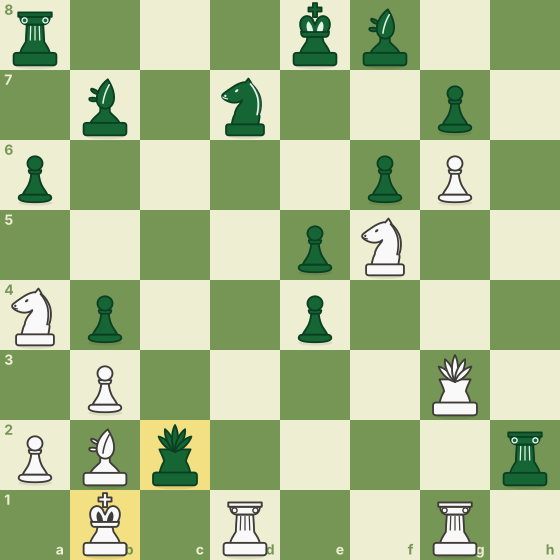
At this point an IM rated 2428 was up almost two and a half pawns against one of India's strongest young players. After 23.Ka1, the engine suggests 23...Qe2; Arif played 23...Qf2, which reduced the advantage to −1.49 — still large. Then came the two moves that decided the match.
First, 24...O-O-O. Castling long, onto the same side as White's attack, brought the evaluation back to 0.00. Stockfish suggests 24...Nc5, which keeps Black's advantage. Second, after 25.Nd6+ Bxd6 26.Rxd6, Arif played 26...Kc7, and the evaluation jumped to +2.60 for White. The correct move was 26...Kb8.
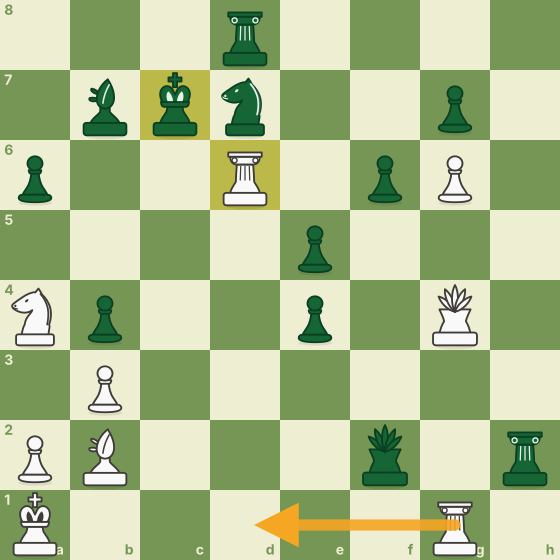
Nihal gave no second chance: 27.Rgd1 Bc6 28.Rxc6+ Kxc6 29.Qxe4+, and then the white queen picked off pawns and pieces one by one. Black resigned after 37.Nc5+.
The lesson from this board: in sharp positions with the clock running, a two-pawn advantage can vanish in three moves. Arif found his chance — the hardest part — but the castling decision under time pressure changed everything. Had this game only been drawn, the match would have ended 2–2.
Board 3: Satria Duta Cahaya vs Gukesh — holding the world champion
Opening: Sicilian Kan, Maróczy Bind (1.e4 c5 2.Nf3 e6 3.d4 cxd4 4.Nxd4 a6 5.c4).
Satria had the white pieces against the world champion, and his choice showed maturity: 5.c4, the Maróczy Bind — the c4-e4 pawn structure that clamps down on the centre and limits Black's space. It is not an opening for attacking the king; it is an opening for control, making the opponent work hard to find play.
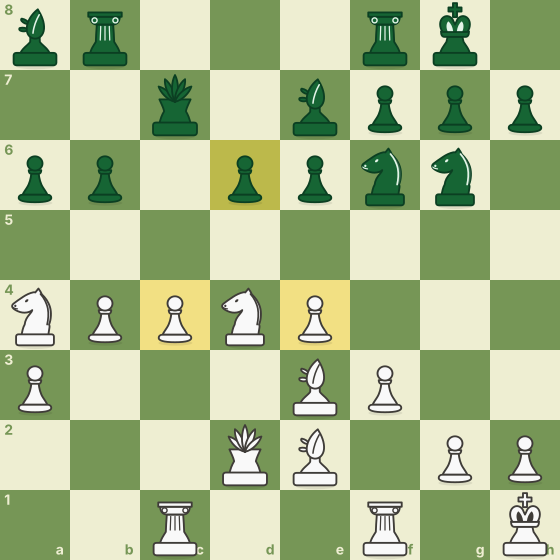
Gukesh chose a hedgehog setup: ...b6, ...Bb7 (later Ba8), ...d6, ...Rb8, and a knight shuttling between e5, g6, and d7. Satria replied with patient manoeuvring: Na4-b2-d3-f2-h3, doubled rooks on the c-file, and a long-prepared f4. According to Stockfish, White was slightly better for almost the whole game — around +0.2 to +0.8, peaking at +0.80 after 12...Rb8 — and not once did Gukesh get a meaningful advantage. The lowest value for White in the entire game was just −0.06.
The tactical turning point came on move 39. Satria broke through with 39.e5, and after 39...Ra3 40.Rc3 Rxc3 41.Rxc3 dxe5 42.Bxg6 fxg6 43.Qxe5 the centre opened up. Gukesh exchanged his bishop for the f3 knight (44...Bxf3 45.gxf3), his rook came in with 45...Rd1+, and after the rooks were exchanged on move 47, the black queen gave perpetual check: 48...Qc2+ 49.Kg1 Qd1+ 50.Kf2 Qd2+ 51.Kg1 Qd1+. Draw by repetition.
Chess.com's report noted that after this draw, Gukesh's live rating dropped below 2700. For Satria, playing with a 2412 rating, a draw with White against the world champion was not just half a point for the team — it was a game he controlled from the start.
The lesson from this board: against a much stronger player, a clear pawn structure is your best ally. Satria did not try to "beat" Gukesh with tactics; he built a position he understood and let his opponent be the one who had to find a way out.
Board 4: Vidit Gujrathi vs Nayaka Budhidharma — the Black side that was briefly better
Opening: King's Indian Defence, Orthodox Variation, Glek System (1.d4 Nf6 2.c4 g6 3.Nc3 Bg7 4.e4 d6 5.Nf3 O-O 6.Be2 e5 7.O-O Na6).
Nayaka chose the most combative opening Black can pick against 1.d4: the King's Indian. The plan is classic — let White build a big centre, then attack the kingside with the f- and g-pawns. After 9.d5 Ng4 10.Bg5 f6 11.Bh4 g5 12.Bg3 f5, the kingside fight had started before move 13.
Nayaka went wrong on move 17: 17...Bg4 is rated by Stockfish as giving White an advantage of +1.24 — Vidit's highest value in the whole game. But Vidit did not exploit it accurately: 18.Re3 and 19.Ba4 are rated as inaccurate, and White's advantage shrank to about +0.2 to +0.3 on moves 20–23. Nayaka consolidated his position: 19...Qf7, 20...Bf5, the knight rerouting to d7 and later to f4.
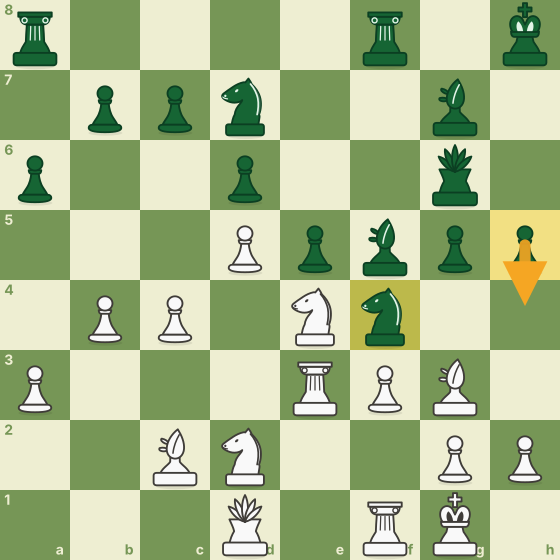
On moves 25–28 it was actually Black who was better. The lowest evaluation for White was −0.78 after 27...h5. Nayaka then chose 28...h4, which according to the engine gave away most of the advantage (back to −0.11), and after 29.Bxf4 exf4 30.Re2 g4 31.fxg4 Bxg4 the position was level. The game was drawn after 34.h3.
The lesson from this board: the King's Indian gives Black real play even against elite players — as long as the kingside attack is carried out patiently. Nayaka showed that he understands his opening plan more deeply than a 314-point rating gap would suggest.
Key moments according to the engine
For easy comparison, here are the most decisive evaluation points from the four games (positive numbers mean White is better, negative mean Black is better):
- Board 1: best for Susanto +0.71 (after 11...Nd7); best for Praggnanandhaa −0.96 (after 49.Ke3). From move 70 the evaluation was locked at 0.00.
- Board 2: best for Arif −2.57 (after 22...Qxc2+). Then 24...O-O-O took it to 0.00 and 26...Kc7 to +2.60. Final position +5.91.
- Board 3: best for Satria +0.80 (after 12...Rb8); best for Gukesh only −0.06. The perpetual check from move 47 is rated 0.00.
- Board 4: best for Vidit +1.24 (after 17...Bg4); best for Nayaka −0.78 (after 27...h5).
Only board 2 ever reached an advantage above two pawns — and it happened for both sides in turn, just four moves apart.
Each player's style as seen in this match
One game is not enough to judge a player's character fully. But opening choices and decision-making under pressure give clear clues.
Susanto Megaranto — the calm defender. The first grandmaster of his generation in Indonesia (he became the country's youngest grandmaster in 2004, at 17) chose the path of simplification and then defended with precision in a long rook endgame. The style on display: solid, patient, and very strong in defensive technique.
Arif Abdul Hafiz — the bold challenger. Grabbing the e4 pawn on move 14 and entering a position with his king in the centre against an opponent castled long is an attacker's decision. Arif found the correct path to a big advantage; what slipped was the handling of that advantage. The style on display: aggressive and creative, with homework to do on converting winning positions.
Satria Duta Cahaya — the position controller. The Maróczy Bind against the world champion, long knight manoeuvres, and an e5 break prepared over a dozen moves. The style on display: positional and disciplined, suited to boards that demand resilience against strong opposition.
Nayaka Budhidharma — the King's Indian fighter. Choosing a sharp opening with Black against a 2697 GM and getting the better of it for a while. The style on display: dynamic and full of initiative, with a mature understanding of the opening plan.
On the Indian side: Praggnanandhaa chose an opening that gave him a long endgame to squeeze — the mark of a player who trusts his technique. Nihal Sarin took a big risk with long castling and a g-pawn storm, and it was precisely his ability to defend a bad position and then counterattack that won the game. Gukesh chose a flexible hedgehog structure and was content to secure a draw by perpetual check when the position offered no more. Vidit played against the King's Indian in classical fashion, but did not force matters once the initiative changed hands.
Each Indonesian player's chances in the rest of the Olympiad
The Chess Olympiad is played over 11 rounds of a team Swiss system, and the narrow loss to India has an upside: in a Swiss, a team that loses to a top seed usually meets an opponent with the same match points in the next round — opponents more evenly matched with Indonesia's strength.
Based on this match, the outlook for each player:
- Susanto Megaranto (board 1). A draw against a 2761 player is a performance far above his 2488 rating. Against 2500–2600 opponents in the coming rounds, his precise defensive style makes his chances of not losing high, and his ability to squeeze endgames gives him winning chances in long games.
- Arif Abdul Hafiz (board 2). In terms of play, this was one of Arif's best games against an elite opponent — he built a position the engine rated as winning. If the conversion pattern is fixed, his chances of scoring against 2400–2550 opponents are wide open, because his aggressive style creates chances that opponents do not hand out for free.
- Satria Duta Cahaya (board 3). A draw with White against the world champion with a slight edge for the whole game. His positional style is the capital for consistently scoring half points against stronger opponents, and full points against equal opponents who are uncomfortable in closed positions.
- Nayaka Budhidharma (board 4). Was better against a 2697 GM with the black pieces. Against opponents closer in rating, the King's Indian he understands so well can be a weapon for winning with Black — something very valuable in team competition.
- Gilbert Elroy Tarigan (reserve). Did not play in this round, but won in round one against Ghana. Rotating fresh players will matter in an 11-round tournament.
One honest note: predicting the results of the coming rounds depends on opponents that were not yet known when this article was written. What can be said with confidence is that the team's performance against India far exceeded its rating expectation, and that is real capital.
What ordinary players can learn from this match
This match is not just for Olympiad fans. There are three lessons that apply to anyone, at any rating:
- Rating is not the result. A gap of almost 300 points produced an expectation of 0.63 points, and the reality was 1.5. Stronger opponents can be held with the right opening preparation and composure.
- Finding an advantage and turning it into a win are two different skills. Board 2 is the perfect example. Train both — tactics puzzles for the first, analysing your own games for the second.
- King decisions under pressure decide everything. Two king moves (24...O-O-O and 26...Kc7) turned −1.2 into +2.6. Before moving your king in a sharp position, check which lines open towards it.
If you want to see these moments for yourself, load the games into Katuranga's Analysis and watch the advantage graph — the swing on board 2 is unmistakable. To understand the structures played, the supporting reading is 10 best openings for every Elo rating (the Sicilian, King's Indian, and Caro-Kann are all covered there) and how to learn chess endgames for rook endgame technique like on board 1.
Closing
A 1½–2½ loss to the defending champions is not a result to celebrate, but it is not one to dwell on too long either. Three draws against 2700-level players — including the world champion — and one game that was briefly won on the board show an Indonesian team ready to compete in Samarkand.
Susanto held out for 79 moves against one of the best players in the world. Satria controlled a game against the world champion. Nayaka briefly held the initiative against a 2697 GM. And Arif found the path to a big advantage against a 2718 player. If one decision on board 2 had gone differently, the story of this match would be Indonesia holds India. There is a lot of Olympiad still to play — and from what round two showed, Indonesia has strong reasons for optimism.
Frequently asked questions
What was the score between Indonesia and India at the 2026 Chess Olympiad?
Indonesia lost 1½–2½ to India in round two of the open section of the 46th Chess Olympiad in Samarkand. Susanto Megaranto drew with Praggnanandhaa, Arif Abdul Hafiz lost to Nihal Sarin, Satria Duta Cahaya drew with Gukesh, and Nayaka Budhidharma drew with Vidit Gujrathi.
Which Indonesian player held Gukesh at the 2026 Olympiad?
IM Satria Duta Cahaya, playing with the white pieces on board 3. He played the Maróczy Bind against the Sicilian Kan, was slightly better according to the engine throughout the middlegame, and the game ended in a draw by perpetual check on move 51.
Was Indonesia ever winning in the game it lost to India?
Yes. On board 2, Arif Abdul Hafiz reached a position that Stockfish rated −2.57 (a big advantage for Black) after 22...Qxc2+. That advantage disappeared after 24...O-O-O and 26...Kc7, and Nihal Sarin won the game on move 37.
What were Indonesia's chances against India according to rating?
By the Elo formula, with an average rating gap of 292 points, Indonesia's expected score was only about 0.63 points over 4 boards. Indonesia scored 1.5 points, more than double that expectation.
Who is on Indonesia's open team at the 2026 Chess Olympiad?
GM Susanto Megaranto, IM Arif Abdul Hafiz, IM Satria Duta Cahaya, IM Nayaka Budhidharma, and IM Gilbert Elroy Tarigan, with team captain Kristianus Liem. In round two against India, Gilbert was rested.
Read also
Cara Jadi Grandmaster Catur: Tangga Gelar FIDE, Syarat Norma, dan Berapa Lama Sebenarnya
Penjelasan lengkap tangga gelar catur resmi — CM, FM, IM, GM dan gelar putri — syarat rating dan norma, cara turnamen dihitung, berapa lama jalannya, serta jalur realistis untuk pemain Indonesia yang mulai dari nol.

Kenapa Kamu Selalu Kalah Main Catur? 8 Penyebab Paling Umum (dan Obatnya)
Bukan karena kamu bodoh, bukan karena lawan pakai mesin. Delapan penyebab kekalahan yang benar-benar sering terjadi di catur amatir — bidak gantung, buru-buru, main terlalu banyak, sampai kebiasaan menyalahkan koneksi — lengkap dengan obat yang bisa dicoba hari ini.

Aplikasi Catur Online Gratis Terbaik 2026: Cara Memilih yang Cocok untuk Kamu
Bingung memilih aplikasi catur? Panduan jujur soal apa yang benar-benar perlu kamu lihat — lawan yang setara, analisis, teka-teki, ukuran aplikasi, kuota internet, dan mana yang benar-benar gratis. Termasuk daftar periksa sebelum kamu memasang apa pun.
Try it on the board
Reading alone doesn't raise your rating. Play one game against a bot, then review it — Katuranga marks your brilliant moves, mistakes, and blunders with Stockfish.